
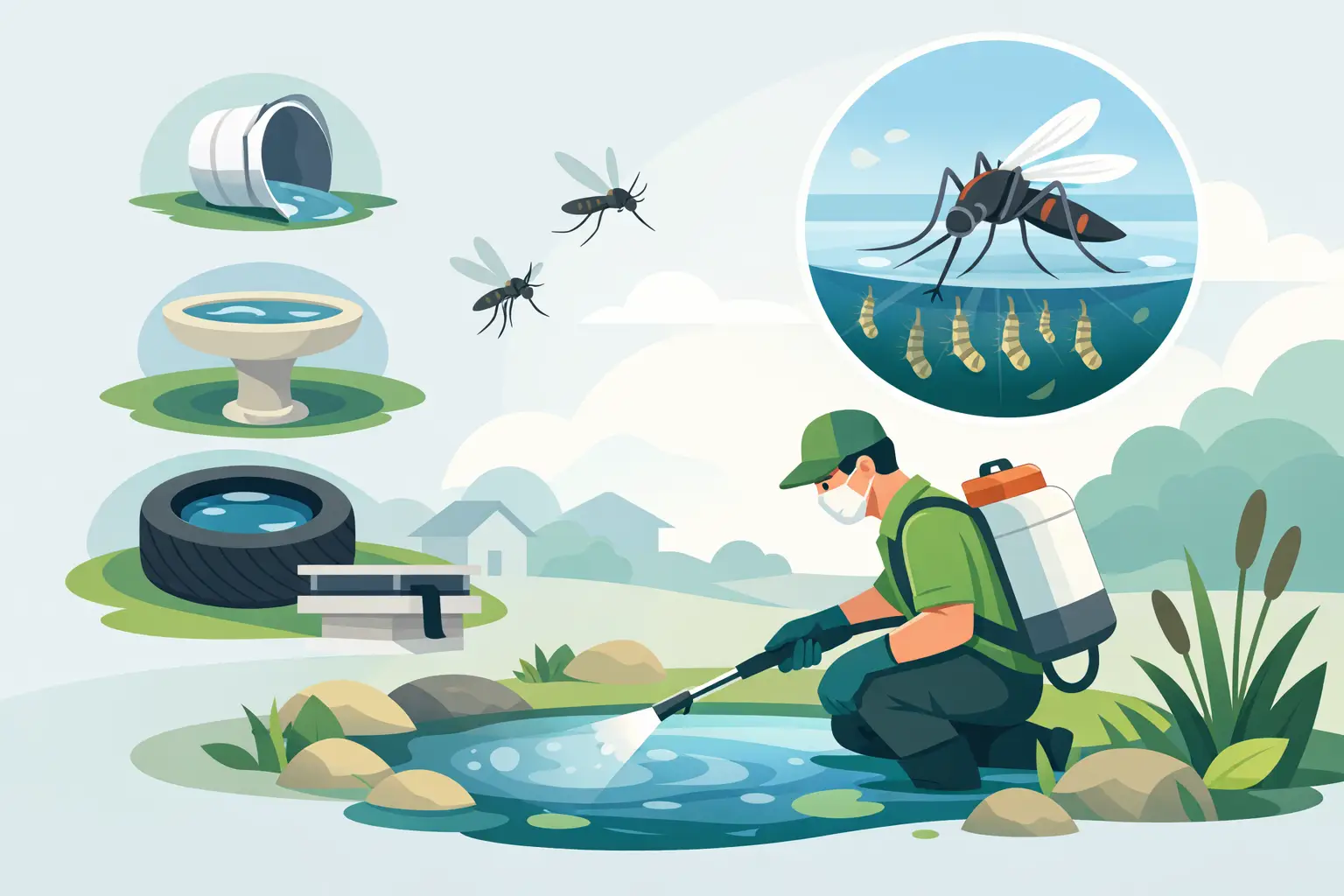
A single clogged gutter or forgotten rain barrel can produce far more mosquitoes than most homeowners expect. To treat mosquito breeding sites effectively, the goal is not to spray every corner of the yard. It is to find the places where mosquitoes can complete their life cycle, remove or manage the water, and use targeted control when water cannot be eliminated.
For families, pet owners, and anyone who wants to enjoy a deck, pool, garden, or backyard gathering, that distinction matters. Adult mosquitoes may rest in shrubs and shaded vegetation, but they begin in water. Addressing breeding sites reduces the source of the problem before those mosquitoes become the biting adults that drive everyone indoors.
Why breeding-site control works
Mosquitoes need standing or slow-moving water to lay eggs and develop. Depending on the species and weather, eggs can become biting adults in as little as a week. Warm Ontario weather after steady rain can speed that process up, which is why a yard that felt comfortable one weekend may feel unusable the next.
The challenge is that mosquito breeding water is not always obvious. A pond or rain barrel comes to mind first, but small containers often cause the bigger problem. Water held in a flowerpot saucer, toy, tarp fold, wheelbarrow, clogged eavestrough, or discarded cup can be enough for larvae to develop.
Removing these sites does more than reduce nuisance bites. It can also lower exposure to mosquito-borne illness and help protect dogs from heartworm. Source reduction is one of the most practical steps a property owner can take because it works alongside professional barrier treatments rather than competing with them.
Inspect your property after rain
The best time to inspect for mosquito breeding sites is one or two days after rainfall. Walk the property slowly, including the side yard, fence line, shed area, and any spot where equipment is stored. Look down as well as up. Containers catch rain, while clogged gutters and low areas hold it out of sight.
Pay special attention to items that sit unused for long periods. Kids’ toys, recycling bins, patio furniture covers, boats, trailers, old tires, birdbaths, and wheelbarrows are common culprits. A mosquito does not need a large puddle. Even a small amount of water protected from wind can become a nursery.
Check landscape features too. Poor drainage near downspouts, compacted lawn areas, blocked catch basins, and low spots beside patios can leave water in place for days. These issues may need more than a quick cleanup. Extending a downspout, clearing debris, adding soil to a low area, or improving grading may provide a more lasting fix.
Remove water wherever you can
The most effective treatment is usually removal. Empty small containers at least once a week, ideally more often during wet, humid stretches. Turn wheelbarrows and toys upside down, store buckets under cover, and pull tarps tight so they shed rain instead of collecting it.
Birdbaths can stay, but the water should be refreshed every few days. The same goes for pet water dishes outdoors. These should never be treated with products not intended for drinking water. Frequent replacement is the safer approach.
Rain barrels are useful, especially during dry periods, but they need a tight-fitting lid and fine mesh over every opening. Inspect the screen regularly. A small tear or gap around an overflow outlet can allow mosquitoes to get inside. If a barrel cannot be fully screened, it needs a different form of mosquito control suited to that specific water source.
Pools and hot tubs require maintenance, not neglect. Properly filtered and treated water is generally not a breeding site, but stagnant water on a pool cover is. Pump it off after rain and keep the cover fitted so it does not sag into water-holding pockets.
Treat mosquito breeding sites that cannot be drained
Some water features are meant to remain in place. Ornamental ponds, rain barrels, drainage areas, and certain catch basins cannot simply be emptied every week. In these cases, use a larvicide specifically labelled for mosquito larvae and appropriate for that type of water.
Larvicides work before mosquitoes become flying adults. Many residential products use Bacillus thuringiensis israelensis, often called Bti, a naturally occurring soil bacterium that targets mosquito and black fly larvae when used as directed. Other options may use insect growth regulators. The right choice depends on whether the water contains fish, wildlife, irrigation water, or is accessible to children and pets.
Never assume a product is safe for every situation just because it is sold for mosquito control. Read and follow the Canadian label carefully, including where it can be used, how much to apply, and how often it needs to be replaced. Do not apply larvicides to moving water, natural wetlands, or ponds with fish unless the product label specifically permits it.
If you are unsure what is collecting water or whether a product is suitable, ask a licensed pest-control professional. Targeted larval control should solve a defined problem, not become a reason to add unnecessary product around the property.
What about standing water in ditches and ponds?
It depends on the site. A healthy pond with moving water, fish, and balanced vegetation may not be a major mosquito source. A shallow, stagnant edge with decaying leaves may be more productive. Drainage ditches can also be regulated or connected to municipal infrastructure, so homeowners should not add products without confirming what is appropriate.
The practical first step is to remove debris that blocks flow where it is safe and permitted to do so. For recurring water issues, a professional assessment can identify whether the area is producing mosquitoes or simply attracting adult mosquitoes from elsewhere.
Pair source control with targeted yard treatment
Breeding-site control is essential, but it does not eliminate every mosquito on its own. Mosquitoes can fly in from neighbouring properties, wooded areas, wetlands, and nearby fields. Adult mosquitoes also shelter in shaded, humid places such as dense hedges, tall grass, under decks, and along fence lines.
That is where a property-specific barrier treatment can help. A professional technician assesses the places mosquitoes rest and travel, then treats targeted vegetation and harborage areas rather than applying a blanket spray across the yard. Timing also matters. Seasonal treatments are most effective when they begin before mosquito pressure becomes overwhelming and continue through peak activity periods.
For homes with children and pets, precision matters. Mosquito Pros plans treatment around the property and focuses on relevant mosquito resting areas instead of applying a blanket spray. The goal is a more comfortable outdoor space with less unnecessary product, alongside clear preparation and re-entry instructions.
Natural treatment options may also suit some properties, although they usually require more frequent service and may perform differently during heavy mosquito periods. A good provider will explain the trade-off clearly instead of promising identical results from every approach.
Avoid the common fixes that miss the source
Foggers and general yard sprays can knock down adult mosquitoes temporarily, but they do not remove larvae from standing water. Relying on them alone often creates a frustrating cycle: mosquitoes return after the next hatch, and the property is treated again without addressing why the problem keeps rebuilding.
Homeowners should also avoid pouring household cleaners, oils, bleach, or fuel into water. These materials can harm plants, pets, beneficial insects, and local waterways, and they are not a responsible way to control mosquitoes. The same applies to random products used off-label in ponds, ditches, or rain barrels.
Keeping grass trimmed can improve access and reduce damp resting areas, but mowing alone will not stop mosquito breeding. The water inspection is still the priority. Think of vegetation management and adult mosquito treatment as support measures, while standing-water control handles the source.
Keep the routine simple all season
A ten-minute weekly check is often enough to catch new breeding sites before larvae mature. Make it part of regular yard care: after mowing, after watering the garden, or after a rainfall. Empty containers, check covers and gutters, refresh birdbath water, and look for new pooling around sheds and downspouts.
Before an outdoor wedding, family barbecue, or commercial event, inspect the site early rather than waiting until guests are arriving. Removing water and scheduling targeted treatment ahead of time gives the best chance of keeping patios, lawns, and gathering spaces comfortable.
A mosquito-free yard is rarely a realistic promise in Ontario’s summer season, especially near wooded or wet areas. But a property with fewer breeding sites, better drainage, and a targeted control plan can feel dramatically different. Start with the water you can manage this week, then get expert help for the sources that keep coming back.


