
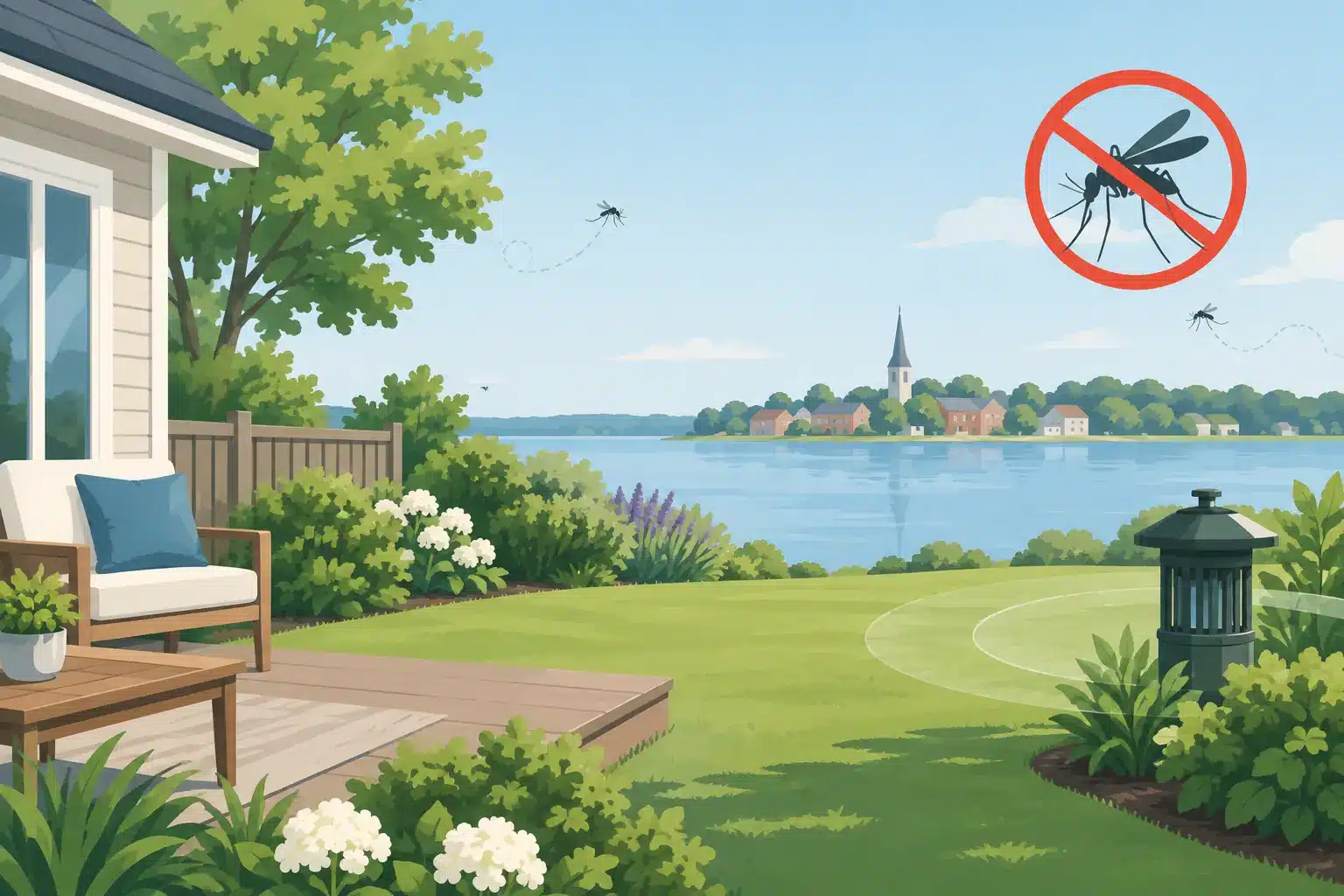
A quiet evening on the patio can change quickly when mosquitoes start gathering around the deck, the dog, and anyone trying to enjoy dinner outside. This Merrickville mosquito prevention guide focuses on the conditions that make Eastern Ontario yards especially attractive to mosquitoes and the practical steps that reduce pressure throughout the season.
Merrickville-Wolford properties often have the combination mosquitoes like best: mature shade, thick vegetation, drainage areas, nearby water, and humid summer weather. Prevention works best when it is not treated as a one-time chore. A clean-up in spring helps, but consistent attention after rain, during hot spells, and before outdoor gatherings makes the real difference.
Why mosquitoes build up around Merrickville yards
Mosquitoes need water to complete their life cycle, but that does not mean a property needs a pond to have a mosquito problem. Small amounts of standing water can be enough. A forgotten bucket, sagging pool cover, clogged eavestrough, wheelbarrow, tarp fold, or plant saucer can hold water long enough for mosquitoes to develop.
Warm, wet stretches speed up the problem. Depending on temperature, mosquitoes can develop from egg to biting adult in roughly a week to 10 days. That is why a yard can feel manageable one weekend and unpleasant after several rainy days.
Adult mosquitoes do not spend all day flying in open grass. They rest in cool, sheltered places such as hedges, cedars, tall grass, hostas, woodpiles, under decks, and dense shrub lines. A prevention plan needs to address both sides of the issue: remove the water where they reproduce and reduce the shaded habitat where adults hide.
Start with water management after every rainfall
The most effective homeowner task is also the simplest: inspect the property for water that should not be there. Make it part of the routine after rain, not only when bites become a problem.
Walk the yard with a specific eye for containers and low spots. Empty and store buckets, toys, wheelbarrows, birdbath trays, and unused planters upside down where possible. Check outdoor furniture covers and pool covers for depressions that collect water. If a rain barrel is in use, it should be properly screened and sealed around openings.
Eavestroughs deserve special attention. Leaves and debris can create hidden pools that keep producing mosquitoes above eye level. Downspouts should carry water away from the foundation without leaving a consistently wet area beside the home. If a low spot holds water for days, grading, drainage improvements, or a better outlet may be a longer-term solution worth considering.
Not every water feature needs to disappear. A maintained pond with movement, circulation, and healthy conditions is different from stagnant water trapped in a container. The goal is not to remove every drop of water from a property. It is to eliminate the small, still sources that repeatedly support mosquito development.
Make resting areas less comfortable for mosquitoes
A tidy yard is not only about appearance. It reduces the cool, humid cover that adult mosquitoes use during the day.
Keep grass cut, especially along fence lines, sheds, gardens, and play areas. Prune shrubs so air can move through them and lift branches away from decks, walkways, and windows. Remove unnecessary brush piles, stacked leaf bags, and damp clutter near the house. Firewood should be stored neatly and away from the main outdoor living area when practical.
There is a trade-off here. Mature plantings provide privacy, shade, and habitat for beneficial wildlife, so a property does not need to be stripped bare to reduce mosquitoes. Focus first on the vegetation closest to patios, pools, children’s play spaces, dog runs, and doors. Opening up these high-use zones can make them more comfortable without changing the character of the whole yard.
Protect the places your family actually uses
Mosquito prevention becomes more effective when it is built around how you use the property. A screened gazebo, patio, dock, garden path, or backyard fire pit may need more attention than an unused corner of the lot.
For patios and decks, airflow is a practical advantage. Outdoor fans can make it harder for weak-flying mosquitoes to land, particularly around seating and dining areas. Use light-coloured, loose-fitting clothing and an appropriate personal repellent when working in the garden, walking near wet areas, or spending time outside around dusk and dawn. Follow product directions carefully, especially when children are involved.
Screens matter too. Repair torn window and door screens before mosquito season reaches its peak. If mosquitoes are entering the home, inspect door sweeps and areas around utility lines as well as obvious screen damage.
Pets need protection as part of the plan. Dogs may spend more time in shaded grass, near shrubs, and along property edges where mosquitoes and ticks are active. Speak with a veterinarian about preventive care that is appropriate for your pet, including protection from mosquito-borne heartworm. Avoid applying household insect-control products directly to animals unless the label specifically says they are intended for that use.
Plan ahead for gatherings and special events
Outdoor weddings, family reunions, cottage weekends, and backyard celebrations can be affected by mosquito activity even when the property usually feels manageable. Waiting until guests are being bitten limits the available options.
Start preparation early by clearing water, mowing, and trimming the event area. Place seating away from dense hedges and wet ground where possible, and use fans around dining spaces. Timing can also help: events held well before dusk may face less mosquito activity than those running through the evening, although local conditions and weather still matter.
For larger gatherings, professional treatment is most useful when it is planned around the event date and the property layout. A proper assessment considers where guests will be, where mosquitoes are likely resting, nearby vegetation, and moisture-prone areas. Broad, indiscriminate spraying is not the same as targeted control.
When a professional mosquito treatment makes sense
Property maintenance can greatly reduce mosquito breeding, but it cannot always solve an established issue. This is especially true for properties beside wetlands, wooded areas, drainage corridors, or large neighbouring lots where mosquito habitat extends beyond your fence line.
Professional mosquito control is often a practical next step when bites are limiting use of the yard, when a family member is particularly sensitive to bites, or when a special event needs dependable protection. It can also help homeowners who have done the basic clean-up but still find mosquitoes resting heavily in vegetation around their outdoor space.
Mosquito Pros assesses each property individually and applies treatment where mosquitoes live and hide: shaded vegetation, perimeter growth, under-deck areas, and moisture-prone zones. This targeted approach is designed to avoid treating areas that do not need attention. Lower-volume applications can use up to 94% less product than traditional high-volume spraying, while following product labels and property-specific instructions.
Treatment is not a replacement for removing standing water. The strongest results come from combining property maintenance with a seasonal treatment plan suited to the site. Some yards need recurring support through peak season, while others benefit from a one-time application before an outdoor event. The right choice depends on the property, surrounding habitat, family routines, and the level of mosquito pressure.
A practical mosquito routine for the season
Early spring is the time to uncover and inspect the yard, clear eavestroughs, repair screens, and deal with containers left out over winter. Through late spring and summer, check for standing water after rain and keep vegetation around living areas trimmed. Before weekends with guests, pay extra attention to patios, decks, play areas, and the route people take from parking to the house.
If the same shaded corners remain full of mosquitoes despite regular maintenance, that is useful information. It tells you where the resting habitat is concentrated and where a property-specific treatment plan can have the greatest effect.
A comfortable yard should not require everyone to retreat indoors before sunset. Start with the water and shelter mosquitoes depend on, protect the spaces your family and pets use most, and arrange professional help early when local conditions are working against you.


