
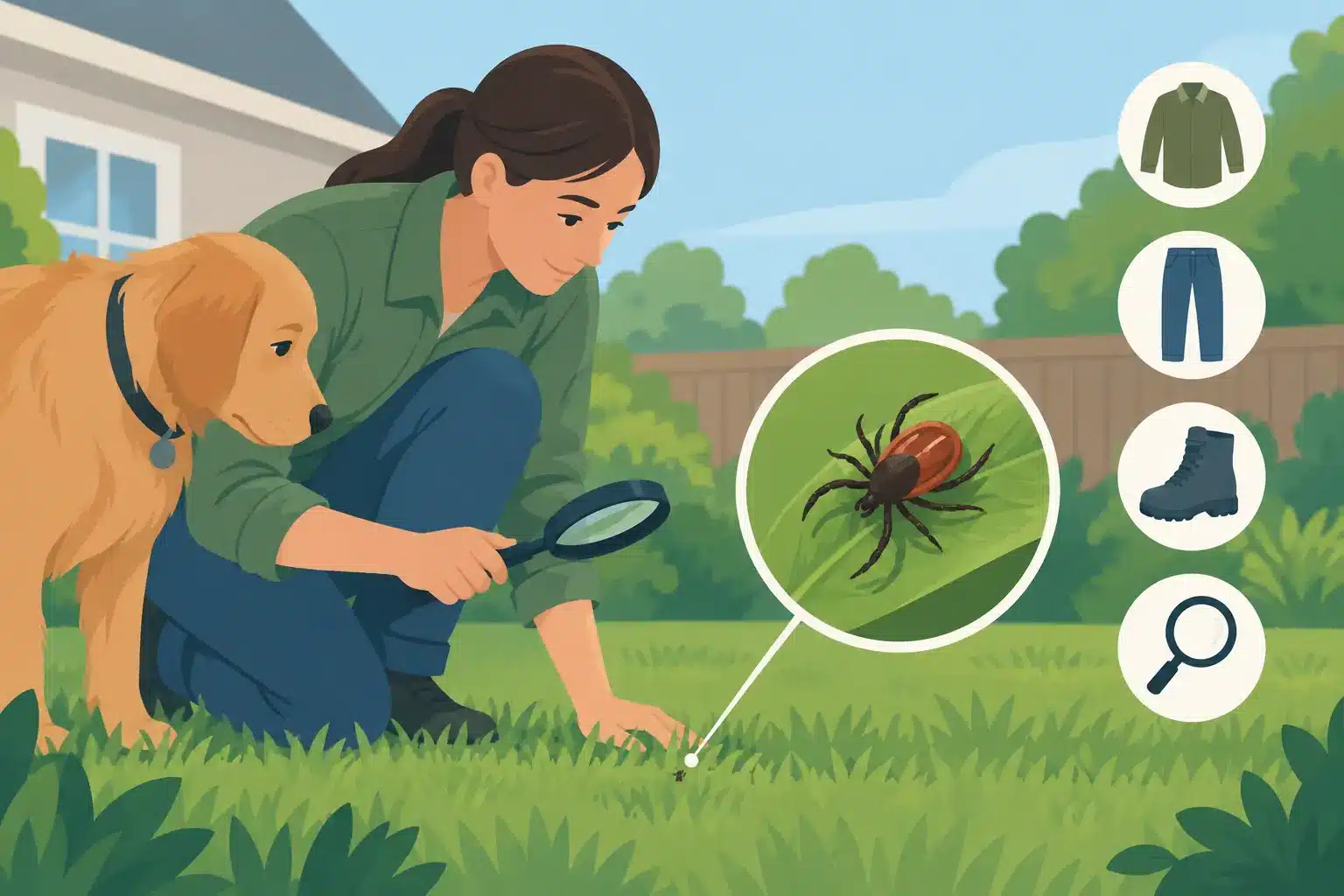
A child cutting through the edge of a woodpile, a dog following its nose along a brush line, or an afternoon spent gardening can be enough for a tick encounter. Knowing how to inspect yard ticks gives you a practical way to identify higher-risk areas before your family and pets spend more time outdoors.
Ticks do not usually live in the middle of a short, sunny lawn. They wait in the places where people, pets, deer, rodents, and wildlife move through cover – especially shaded edges, tall grass, leaf litter, dense shrubs, and areas where the lawn meets woods or unmanaged vegetation. A careful inspection helps you focus prevention where it will make the biggest difference.
When to inspect your yard for ticks
In Eastern Ontario, begin looking as soon as snowmelt exposes leaf litter and ground cover. Tick activity can start surprisingly early in spring whenever temperatures rise above freezing, and it can continue well into the fall. Blacklegged ticks, the species associated with Lyme disease, are often active during cooler periods when mosquitoes are less noticeable.
A monthly inspection is a useful baseline during tick season. Inspect more often if you have seen ticks on a pet or family member, completed landscaping work, noticed deer or rodents on the property, or have children using a play area near trees and shrubs. It is also smart to walk the yard before a backyard party, cottage weekend, or outdoor event.
Check after wet weather as well. Moisture does not create ticks, but humid, protected vegetation helps them survive. A dry, open lawn may have lower risk than the shaded perimeter around it.
What a tick-friendly yard looks like
Start your inspection at the property’s edges rather than the centre of the lawn. Ticks cannot jump, fly, or drop from trees. They climb onto low vegetation and wait with their front legs extended for an animal or person to pass. This behaviour is called questing, and it is why knee-high vegetation and transition zones deserve close attention.
Walk slowly along fences, stone walls, woodlots, hedge lines, creek banks, ornamental grasses, and the outer edge of garden beds. Look for damp, overgrown, or undisturbed cover. You are not likely to see every tick with the naked eye, especially immature ticks, but you can identify the habitat that supports them.
Pay particular attention to these conditions:
- Tall grass, weeds, and brush beside paths, patios, sheds, and play spaces.
- Leaf piles, fallen branches, stacked firewood, and dense groundcover that shelter small mammals.
- Shrub borders and low-hanging branches that create cool, shaded corridors.
- Areas with deer tracks, droppings, bird feeders, compost, or evidence of mice and chipmunks.
Woodpiles deserve a closer look because they can attract rodents, which help support tick populations. Store firewood neatly in a dry, sunny location when possible, rather than against the house or beside a frequently used sitting area.
A practical way to inspect yard ticks
Wear light-coloured long pants, closed shoes, and gloves. Tuck pant legs into socks if you will be walking through taller vegetation. Light clothing makes it easier to spot a tick before it reaches bare skin. Bring a phone to photograph problem areas, a pair of fine-tipped tweezers, and a white towel or cloth.
First, map your yard in a simple loop. Walk from the driveway or patio through the lawn, along the fence line, around sheds and play structures, then beside gardens and wooded or brushy borders. Pause at every place where tidy lawn turns into shade, taller plants, or leaf litter. These transitions are often more meaningful than the total size of your property.
For a closer check, slowly drag a white cloth over low grass and vegetation at the yard edge. Ticks that are questing may cling to the fabric, where they are easier to see. Check the cloth frequently, especially after each short section. Avoid running the cloth through thorny brush or places where visibility is poor, and do not use this method as proof that an area is tick-free. A negative cloth check only means you did not collect ticks at that moment.
If you find a tick on the cloth or your clothing, use tweezers to remove it without touching it directly. Place it in a sealed container or bag if you may need help identifying it. Take a clear photo from above beside a coin or other size reference. Ticks are often mistaken for tiny spiders, beetles, or plant debris, so a photo can be useful.
Check the people and pets who use the yard
A yard inspection and a body check work together. Ticks can be small enough to miss outdoors, then stay attached in hidden areas. Check everyone after time in brush, long grass, garden beds, or wooded edges, ideally before coming inside for the evening.
For children, look carefully around the hairline, behind the ears, under the arms, around the waist, behind the knees, and between the legs. On adults, also check under watchbands, clothing seams, and anywhere a tick may have moved beneath a waistband.
Run your hands slowly over dogs and cats, especially around the ears, eyelids, collar area, under the front legs, groin, between toes, and under the tail. A small bump can be easier to feel than to see. Pet tick prevention recommended by your veterinarian remains valuable even when you actively manage the yard.
If you find an attached tick, remove it promptly with fine-tipped tweezers. Grasp it as close to the skin as possible and pull upward with steady, even pressure. Do not burn it, cover it with petroleum jelly, or twist it aggressively. Clean the bite area and your hands afterward. If a rash, fever, fatigue, headache, or other symptoms develop after a tick bite, contact a health-care provider and mention the exposure.
Reduce the conditions ticks rely on
Your inspection should lead to a few targeted changes, not a complete redesign of the yard. Keep lawn edges mowed, remove leaf litter around high-use areas, and trim back vegetation from paths, decks, patios, and play equipment. Create a clear walking route through the property rather than asking children or guests to pass through brush.
It helps to separate active outdoor spaces from wooded or unmanaged borders. A wider maintained strip of lawn, mulch, or gravel can make the edge easier to see and less inviting for ticks than dense, damp vegetation. The best approach depends on your property. A cottage lot with mature trees needs a different plan than a compact yard in Kemptville or a rural property with fields and deer traffic.
Wildlife management matters, but it has limits. Removing bird feeders during peak activity, securing garbage, managing rodent harbourage, and keeping woodpiles away from living areas can reduce attractive conditions. Deer fencing may help on some properties, but it is not practical or necessary for every home.
When professional tick control makes sense
Landscaping and personal checks reduce risk, but they cannot always address a persistent tick issue. Consider a professional property assessment if ticks are repeatedly found on people or pets, your yard borders woods or tall grass, wildlife travels through the property, or you need a more protected outdoor area for children, pets, customers, or an event.
Effective tick control is not about blanket spraying every square metre. A property-specific plan focuses on the shaded, vegetated, moisture-prone perimeter areas where ticks rest and move. Mosquito Pros uses targeted, lower-volume applications and follows product labels and property-specific instructions, helping Eastern Ontario families reduce tick pressure without treating more of the property than necessary.
Before the next warm weekend, take ten minutes to walk your yard’s edges rather than assuming the lawn tells the whole story. That small routine can reveal where a little cleanup, a better pathway, or professional help will give your family and pets more confidence outdoors.


