
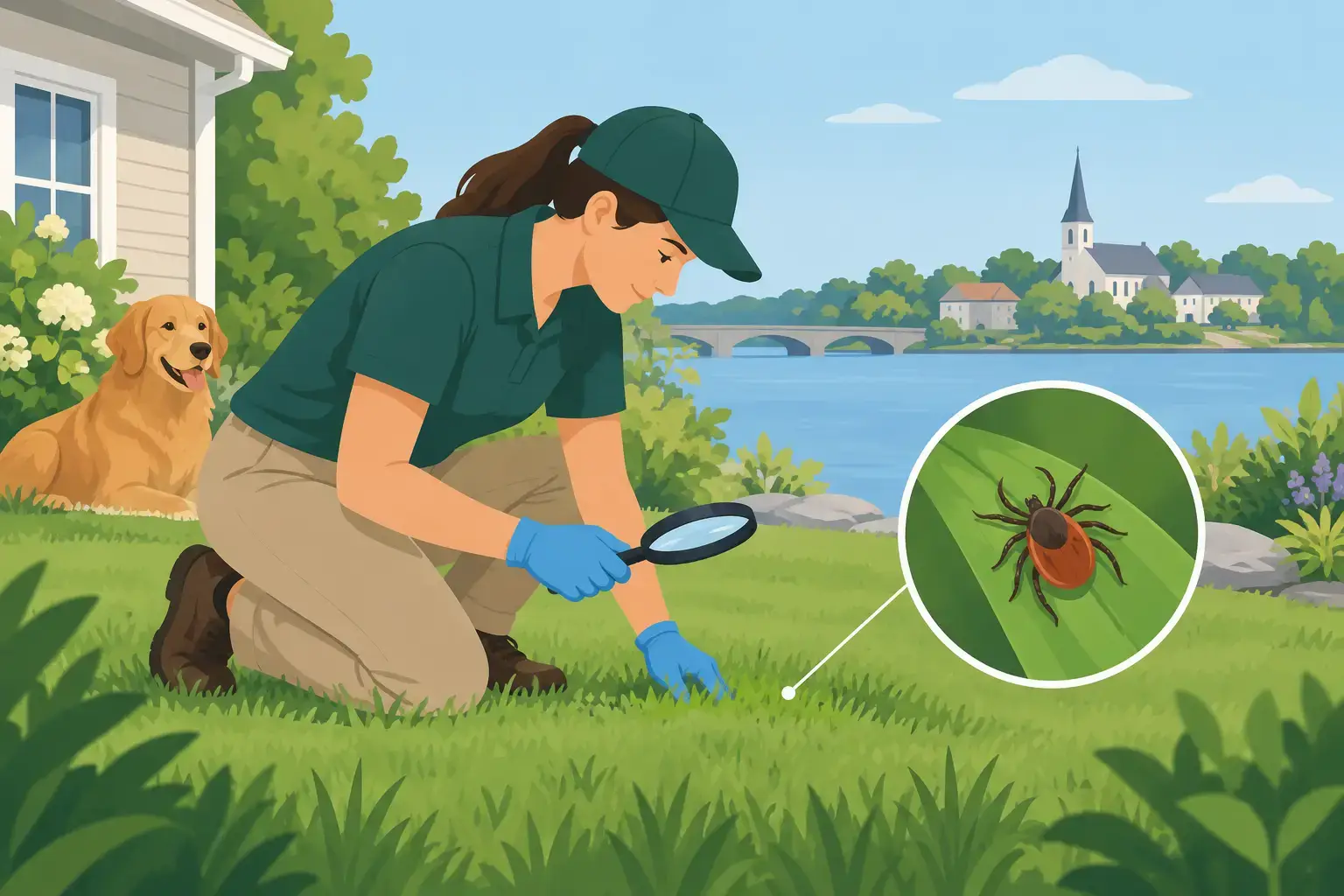
A tick rarely announces itself in the middle of a lawn. It is more likely to be waiting along a shaded path, beneath a low shrub, beside a woodpile, or where the yard meets taller grass. Merrickville tick inspections help identify those high-risk areas before children, pets, and guests spend more time outdoors.
For families in Merrickville-Wolford and surrounding Eastern Ontario communities, tick control is not about making a yard completely sterile. It is about reducing the places where ticks can wait, making outdoor routines safer, and choosing a plan that suits how your property is actually used. A careful inspection is where that work starts.
What a Tick Inspection Looks For
Ticks need more than grass. They benefit from shade, moisture, leaf litter, ground cover, and wildlife activity. That is why an effective assessment looks beyond the visible lawn and focuses on the transition zones that often get missed during regular yard maintenance.
A property assessment typically considers the perimeter of the lawn, garden beds, fence lines, wooded edges, stone walls, brush piles, sheds, play structures, pet runs, and pathways to common outdoor areas. It also considers how people and pets move through the property. The route a child takes to a trampoline or the area where a dog regularly explores can matter more than an open, sunny section of turf.
The goal is not to treat every square metre the same way. A well-planned tick inspection identifies where targeted control will have the greatest value and where simple property adjustments may lower exposure.
High-risk areas are often close to home
Many homeowners expect ticks to be a concern only at cottages, trails, or heavily wooded properties. Those locations can certainly carry higher risk, but residential yards can also create favourable tick habitat. A neighbour’s unmanaged edge, a ravine behind the property, frequent deer activity, or a stack of firewood near a sitting area can all change the picture.
The highest-risk areas are often where a maintained yard meets natural cover. That edge may be only a few steps from a deck, garden, dog run, or children’s play space. Inspecting it closely helps turn a vague concern into a practical plan.
When Merrickville Tick Inspections Make Sense
The best time to assess a property is before outdoor activity reaches its seasonal peak, but an inspection can still be useful after a tick has been found. Seeing one tick does not automatically mean there is a major infestation. It does mean the property deserves a closer look, especially if the tick may have been picked up at home.
Consider arranging an assessment if your family has found ticks on a pet, noticed deer or small wildlife moving through the yard, or spends time near long grass and wooded edges. It is also sensible before a season of frequent backyard use, particularly for families with young children who play close to the ground.
Properties are not all alike. A compact, open lot may need attention in a few specific border areas, while a larger rural property may have several zones with different levels of exposure. Conditions can also change from one year to the next as landscaping matures, drainage shifts, or nearby land use changes.
Why a Property-Specific Plan Matters
Generic tick control can overlook the details that determine whether a treatment is worthwhile. A blanket approach may spend time and product in low-risk areas while leaving the locations that matter most under-addressed. It can also ignore practical concerns, such as where pets rest, where children play, and where a family grows food.
Mosquito Pros assesses site conditions and develops targeted treatment plans based on the property, the areas of concern, and the way the outdoor space is used. Products are applied according to their labels and property-specific instructions. This helps keep the service focused on meaningful tick habitat rather than treating a yard as though every corner carries the same risk.
Treatment is one part of risk reduction, not a substitute for awareness. Tick activity can be influenced by weather, wildlife movement, vegetation, and the amount of natural cover around a property. Results depend on those conditions, which is why a realistic assessment is more useful than a one-size-fits-all promise.
What Homeowners Can Do Between Visits
A professional inspection can identify priority areas, but simple yard habits also make a difference. Keep lawn edges trimmed, remove excess leaf litter where practical, and avoid letting brush or long grass creep into high-use spaces. Firewood and yard materials are best kept away from the house, play areas, and pet lounging spots when possible.
It also helps to create a clearer separation between natural edges and the parts of the yard your family uses most. A maintained walking route to the garden, shed, or play area can reduce contact with vegetation where ticks may wait. On larger properties, that may mean giving particular attention to the paths people and pets use every day rather than trying to change every natural area.
These steps are useful, but they have limits. If a property borders woods, fields, unmanaged land, or active wildlife corridors, maintenance alone may not provide the level of reduction a family wants. That is where targeted seasonal tick control can add another layer of protection.
Protecting Pets, Children, and Outdoor Time
Ticks can be small enough to go unnoticed until they have already attached. Checking children and pets after time in tall grass, garden borders, or wooded areas remains a smart routine, even after a property has been treated. Pay close attention to pets that explore under shrubs, along fence lines, or near brush.
For children, a quick check after outdoor play can become as routine as washing hands before a meal. For pets, speak with a veterinarian about appropriate tick prevention for their age, health, and lifestyle. Yard control and personal or pet protection work best together because each addresses a different part of the risk.
Families should also know what to do when they find a tick. Remove it promptly with fine-tipped tweezers, clean the area, and monitor for symptoms or concerns. If there is any question about a bite, possible illness, or the need for medical guidance, contact a healthcare professional. For pet health concerns, contact a veterinarian.
Questions to Ask Before Booking Tick Control
Before booking, it helps to be clear about where ticks have been found and how the property is used. Share whether there are pets, children, vegetable gardens, ponds, beehives, wooded boundaries, or areas that must be avoided. These details allow for a more informed assessment and clear property-specific instructions.
You should also ask what areas will be targeted, what preparation is needed before service, and how long people and pets should stay out of treated areas. A professional provider should be able to explain the plan plainly, without treating every property as identical.
A free quote is a practical first step for Merrickville homeowners who want to confirm service availability and discuss their property’s needs. Early action gives you more time to address problem areas before they become part of every outdoor routine.
Your yard should be a place for family dinners, dogs at play, gardening, and quiet evenings outside – not a space that creates constant worry. A careful inspection can show where the risk is coming from and help you make a measured decision about the protection your property needs.