
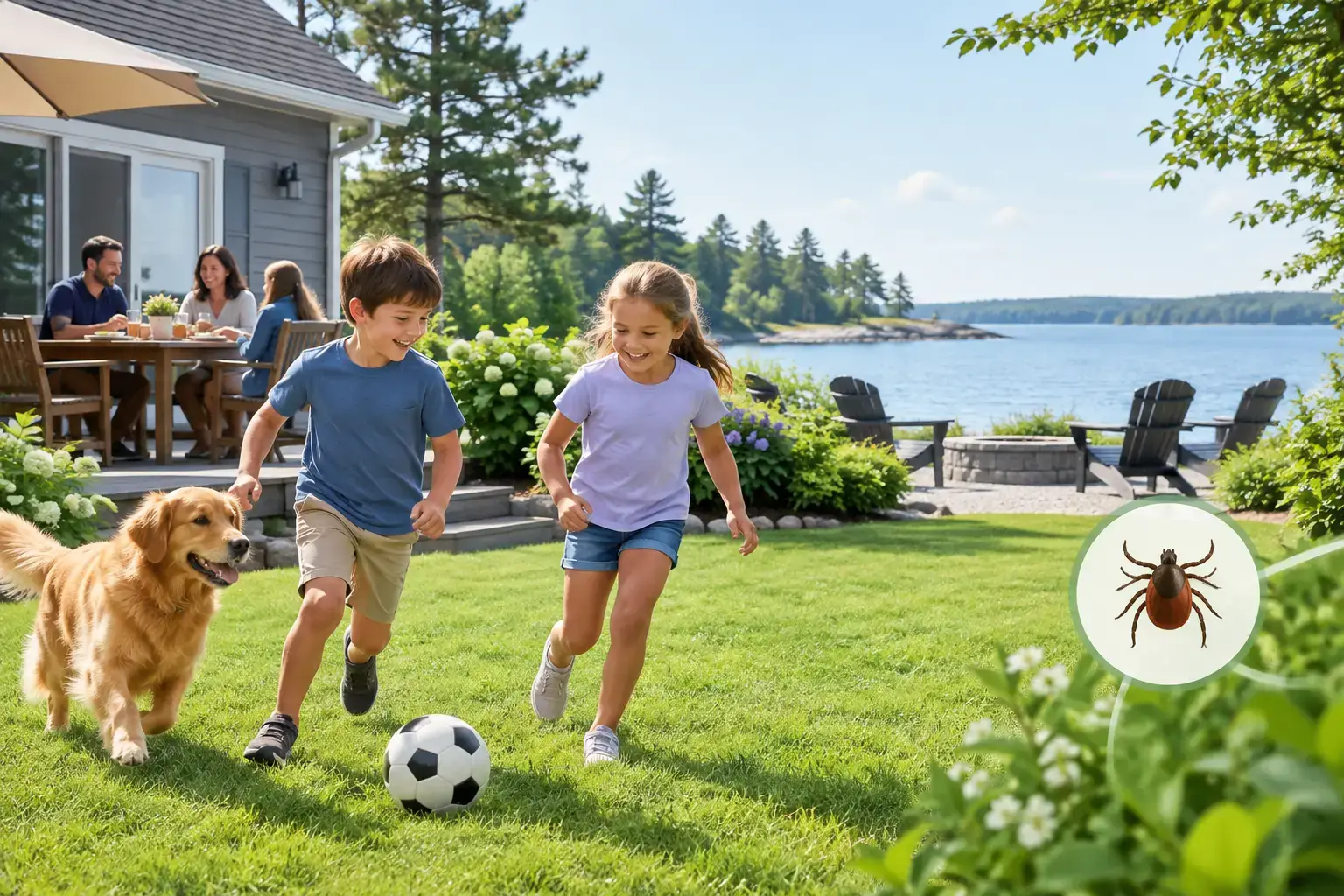
A child cuts through the long grass to reach the trampoline. A dog noses along the cedar hedge. Those are the everyday yard moments that can create tick exposure. This tick treatment property example shows how a targeted plan can reduce tick habitat around the places Ontario families and pets use most.
The goal is not to treat every square metre of a property without thought. Effective tick control starts by identifying where ticks are most likely to rest, where people and pets travel, and which conditions keep the property attractive to them. That approach helps deliver meaningful coverage while following product labels and property-specific instructions.
A tick treatment property example: the typical family yard
Consider a suburban Eastern Ontario home with a fenced backyard, mature trees along one boundary, a woodpile near the shed, a vegetable garden, and a dog that spends time outside. The lawn itself is maintained, but the edges of the property are shaded and slightly overgrown. A narrow path connects the deck to the shed and back gate.
This is a common setup for tick concerns. Blacklegged ticks are often associated with wooded, brushy, and leaf-littered areas, especially where wildlife may travel. They do not need a large forest in the middle of the yard. A neglected border, ornamental grasses, stacked materials, and the transition between lawn and woods can provide the cover they need.
A property assessment would focus on the outer edges first, then on the routes people, children, and pets take through those areas. The deck dining area may be the centre of family life, but the tick risk may be concentrated 20 feet away along the hedge line and the path to the shed.
How the treatment area is selected
A professional tick treatment is typically a precision perimeter service, not a broad application across open lawn. On this sample property, the technician would inspect likely harbourage zones and build treatment around them.
The primary treatment areas may include the wooded boundary, leaf litter beneath shrubs, the fence line, the shaded side yard, the perimeter around the woodpile, and vegetation beside the walking path. Attention may also be given to ground cover, dense plantings, and areas where pets frequently move in and out of cover.
Open, sunny turf generally does not need the same focus as shaded edge habitat. This matters because treatment should match the pest and the site. A customized plan uses product only where it can make a practical difference, rather than treating the entire property as if every area carries equal risk.
The technician should also note sensitive or use-specific areas before service. That can include vegetable gardens, water features, play structures, pet spaces, and outdoor furniture. Any required preparation and re-entry instructions are provided based on the product label and the details of the property.
What happens before treatment
The property owner can help make the visit more effective with a few simple preparations. The lawn should be cut where practical, and fallen branches, dense weeds, and heavy leaf buildup should be addressed before the appointment. This does not replace treatment, but it makes potential tick habitat easier to identify and manage.
Pets should be kept indoors or away from the service area during application. Children should also remain out of the treatment area until the specified re-entry conditions have been met. Because every property and product is different, the instructions provided for that visit take priority over general advice.
If there is a gate, shed area, dog run, or side yard that needs access, it should be available on service day. Clear access lets the technician cover the habitat zones that matter, rather than limiting the treatment to the most visible parts of the yard.
Why vegetation management still matters
Tick treatment works best as part of a property plan. A treated perimeter can reduce tick pressure, but a yard that stays damp, cluttered, and overgrown will continue to invite wildlife and provide cover for ticks.
On the example property, the homeowners could trim back vegetation that touches the main path, remove leaf litter around the shed, and keep the woodpile organized and away from high-use family areas where possible. They could also maintain a defined transition between the lawn and the wooded edge. These changes make the space less comfortable for ticks and easier to monitor.
Wildlife movement is another consideration. Deer, rodents, and other animals can contribute to tick activity, so the conditions around a property line matter. A yard bordering forest, field, ravine, or unmanaged land may need more attention than a sunny, open lot. This is why a neighbour’s tick experience is useful context, but not a complete treatment plan for your own property.
What results should homeowners expect?
The purpose of targeted tick control is to reduce tick activity in treated habitat and lower the chance of encounters around your home. It is not a guarantee that a tick can never enter the property. Ticks can be carried in by wildlife, pets, clothing, or visiting people, particularly when a home is close to natural areas.
That is also why personal checks remain worthwhile after time in tall grass, wooded trails, or unmanaged areas. Check children, pets, and clothing after outdoor play or walks, even when the home yard is on a treatment plan. Fast tick removal is a sensible part of reducing disease risk.
Treatment timing depends on site conditions, tick pressure, weather, and the service plan selected. Some homes benefit from scheduled seasonal protection, while others need a targeted visit after increased activity is noticed or before a period of heavy yard use. A property with a cottage-style lot in Rideau Lakes may require a different approach than a compact home yard in Kemptville or Smiths Falls.
Questions that improve a tick control quote
A good quote starts with the information that changes the treatment plan. The size of the property matters, but so do the conditions around it. When requesting a quote, describe whether the yard has woods, dense shrubs, long grass, a ravine, a dog run, trails, play areas, gardens, or a history of ticks.
It also helps to explain what prompted the call. Have ticks been found on a pet? Is a child regularly playing near the back fence? Are guests using a trail to reach a dock or fire pit? Those details help prioritize the areas that deserve the closest attention.
For homeowners who want a lower-spray, family-conscious approach, say so from the outset. The right service should be based on your property, your outdoor routines, and the treatment options suitable for the site – not on a one-size-fits-all package.
When to book a targeted treatment
Do not wait until the yard becomes difficult to use. Booking before your family is spending long afternoons outside gives time to assess the property and treat the areas where exposure is most likely. It can also be a practical step before summer gatherings, extended visits from grandchildren, or the start of regular cottage weekends.
Mosquito Pros provides customized tick control for homes and outdoor properties across Eastern Ontario, with service recommendations based on real site conditions. A free quote can confirm availability at your address and help determine whether a targeted tick treatment fits your property.
Your yard should feel like a place to let children play, let pets explore, and enjoy the season with more confidence. Start with the edges, the shade, and the routes your family uses every day – those small details often make the biggest difference.