
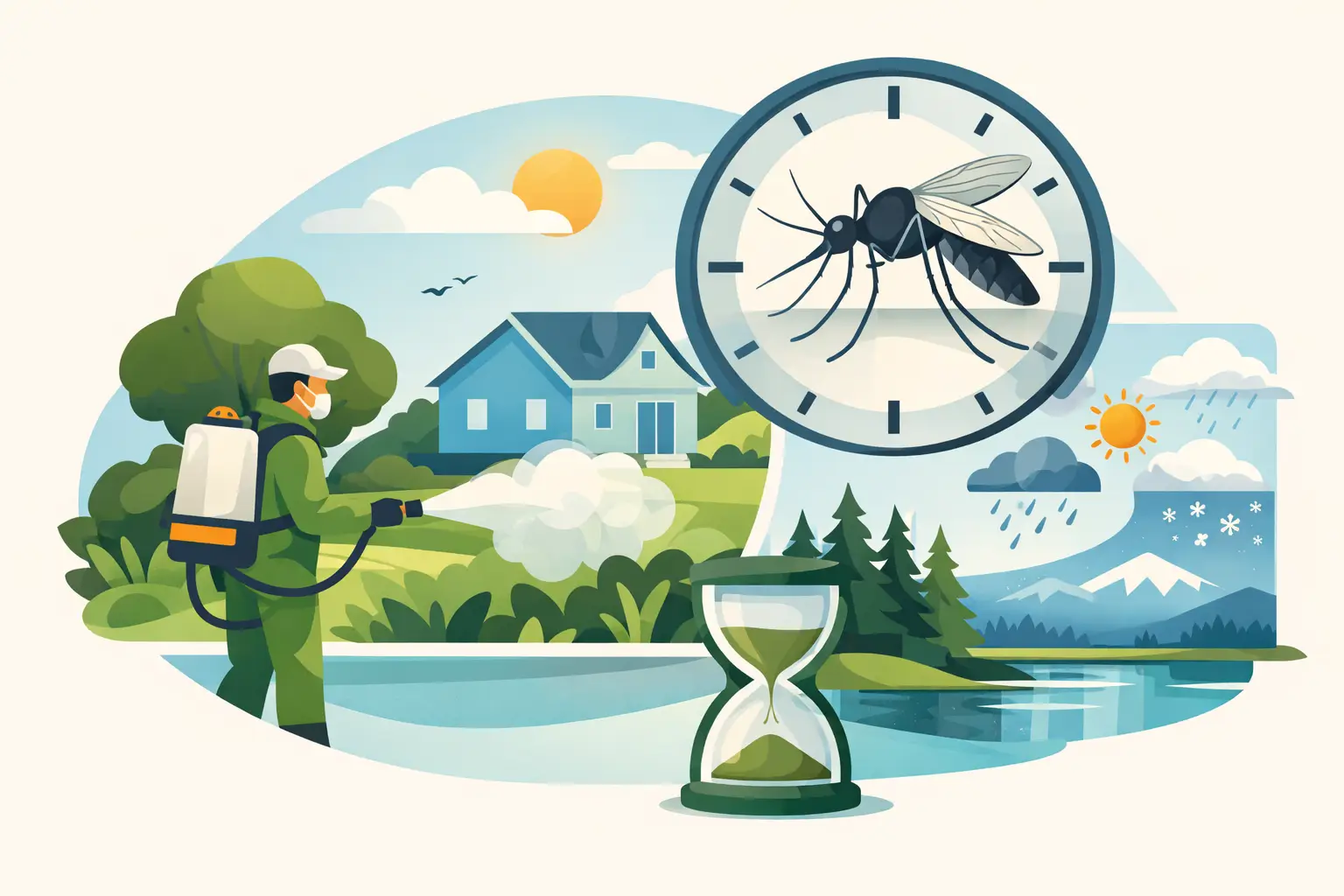
A mosquito treatment applied before a backyard birthday, patio dinner, or cottage weekend should not fade after a few days. For most Ontario properties, the answer to how long mosquito treatments last is about three to four weeks. That window can vary, however, based on weather, property conditions, mosquito pressure, and the type of treatment used.
A professional treatment is designed to reduce active adult mosquitoes where they rest and breed around your property. It is not a one-time, season-long shield. Understanding what affects the treatment timeline helps homeowners, pet owners, and event hosts plan service when it will make the biggest difference.
How Long Do Mosquito Treatments Last?
A conventional barrier treatment typically provides meaningful mosquito control for approximately 21 to 30 days. The product is applied strategically to the shaded, protected vegetation where adult mosquitoes spend much of the day – shrubs, hedges, under-deck areas, tall grass edges, and other cool resting places.
The treatment leaves a residual on those targeted surfaces. As mosquitoes land or rest there, it helps reduce the adult population over time. Because new mosquitoes can continue to emerge from standing water nearby, recurring service is usually the most reliable way to maintain comfortable outdoor space through the season.
Natural mosquito treatment options can also reduce mosquito activity, but their residual effect may be shorter. They are a practical choice for households that prefer a plant-based approach, particularly when paired with frequent service and strong source reduction around the yard. The right option depends on your family’s priorities, the property layout, and how intense mosquito activity is in your area.
Why Treatment Duration Varies From Yard to Yard
Ontario mosquito season is not the same on every property. A sunny, open lot with good drainage can have very different pressure than a shaded yard beside woods, wetlands, ditches, or neighbouring standing water.
Rain and irrigation
Rain does not automatically wash a properly applied treatment away. Once it has dried according to product directions, it is designed to remain on treated foliage. Still, repeated heavy rainfall can create new breeding sites and support another wave of mosquitoes. Frequent sprinkler use may also affect treated leaves and create unnecessary moisture around the property.
Heat, sun, and plant growth
Mosquitoes prefer shade, humidity, and sheltered vegetation. Hot weather can accelerate plant growth, which means fresh, untreated leaves can appear between visits. Direct sunlight and environmental exposure can also gradually reduce the residual effect on exposed surfaces. A technician should focus treatment on the areas mosquitoes actually use, not simply spray every part of the yard.
The amount of standing water nearby
Even the best barrier treatment cannot stop mosquitoes from breeding in water that remains available week after week. Birdbaths, clogged eavestroughs, tarps, toys, unused planters, wheelbarrows, and low spots in the lawn can all hold enough water for mosquito larvae.
Some breeding sources may be outside your property, such as a nearby pond, drainage area, or neglected neighbouring yard. In those situations, regular perimeter and vegetation treatments become especially valuable because new adult mosquitoes can move into your outdoor living areas.
Mosquito species and local pressure
Different mosquito species behave differently. Some travel farther than others, while some stay close to their breeding site. After extended rain or flooding, populations can rise quickly across Merrickville, Kemptville, Smiths Falls, and other Eastern Ontario communities. A yard that was comfortable in June may need more attention during a wet July or August.
What a Mosquito Treatment Can and Cannot Do
A quality treatment can significantly reduce the number of adult mosquitoes that rest in treated areas. Many homeowners notice a difference within a day or two, particularly in patios, play areas, pool decks, and paths through the yard. The goal is a more usable, more comfortable outdoor environment for people and pets.
It cannot guarantee that you will never see a mosquito again. Mosquitoes can fly in from adjacent properties, hatch after a rain event, or avoid an area if conditions change. Honest mosquito control is about reducing pressure consistently, not promising an impossible mosquito-free property.
That distinction matters for health as well as comfort. Mosquitoes can expose dogs to heartworm risk, while ticks can carry Lyme disease. Targeted seasonal treatment, combined with practical yard maintenance and appropriate personal protection, helps reduce the chance of unwanted encounters around the home.
Why Recurring Treatments Work Better Than One Spray
One treatment can be a strong short-term solution before an outdoor event or during a sudden mosquito surge. For ongoing protection, monthly service is usually more effective. It maintains coverage as residual protection naturally declines and as new mosquito activity develops.
A recurring plan also gives the technician a chance to adjust the approach. If mosquitoes are concentrated near a cedar hedge, a shaded side yard, or a wet area behind the garage, those conditions can be addressed on the next visit. This property-specific approach is more effective than treating every home exactly the same way.
For special events, timing is equally important. Booking treatment shortly before a wedding, family gathering, barbecue, or commercial outdoor event gives the service its best chance to reduce active mosquitoes where guests will spend time. If the event is planned during peak season, ask about timing well in advance rather than waiting until the week is already forecast to be hot and wet.
Make Each Treatment Last Longer
Professional treatment does the heavy lifting, but a few simple habits help keep the mosquito population lower between visits. Once a week, walk the property after rain and empty or remove anything that holds water. Refresh birdbath water regularly, clear blocked eavestroughs, cover rain barrels properly, and keep tarps pulled tight so they do not collect puddles.
Keep grass trimmed and thin back overly dense vegetation around seating areas, decks, and children’s play spaces. Mosquitoes are weak fliers and tend to rest in humid, sheltered areas during the day. Improving airflow and reducing heavy shade near the spaces you use most can make a noticeable difference.
For evenings outdoors, use fans on patios or covered porches. Moving air makes it harder for mosquitoes to fly and land. Light-coloured clothing, long sleeves when practical, and a Health Canada-approved personal repellent add another layer of protection when mosquito pressure is high.
Safety Should Be Part of the Treatment Plan
Families should not have to choose between enjoying the backyard and feeling confident about what is used there. A professional mosquito service should explain where treatment is being applied, why those areas were selected, and any temporary precautions to follow.
At Mosquito Pros, treatment plans are tailored to the property rather than built around a one-size-fits-all spray pattern. Targeting mosquito resting areas with lower-volume, family-conscious methods can reduce unnecessary application while still focusing on the places that matter most. Always follow the technician’s instructions about keeping children and pets away until treated areas are dry.
If you have a vegetable garden, pollinator plants, a pond, backyard chickens, or other specific concerns, mention them before service. These details help shape a safer, more precise plan for your property.
When to Schedule Mosquito Control in Ontario
The best time to begin is before mosquito activity becomes overwhelming. In Ontario, that often means starting in late spring as temperatures rise and continuing through the warm season. A monthly schedule is common, with adjustments after long periods of rain or when local mosquito numbers increase.
Do not wait for every family member to come inside covered in bites. Early, consistent treatments can make patios, gardens, dog runs, and outdoor gathering spaces more enjoyable before peak summer pressure arrives. For a yard with persistent mosquitoes, a property assessment can identify the shaded harbourages and moisture sources that deserve the most attention.
A well-timed treatment plan gives your household more than fewer bites. It gives you a practical way to use the outdoor space you have worked hard to create – with more comfort for your family, your guests, and your pets.


