
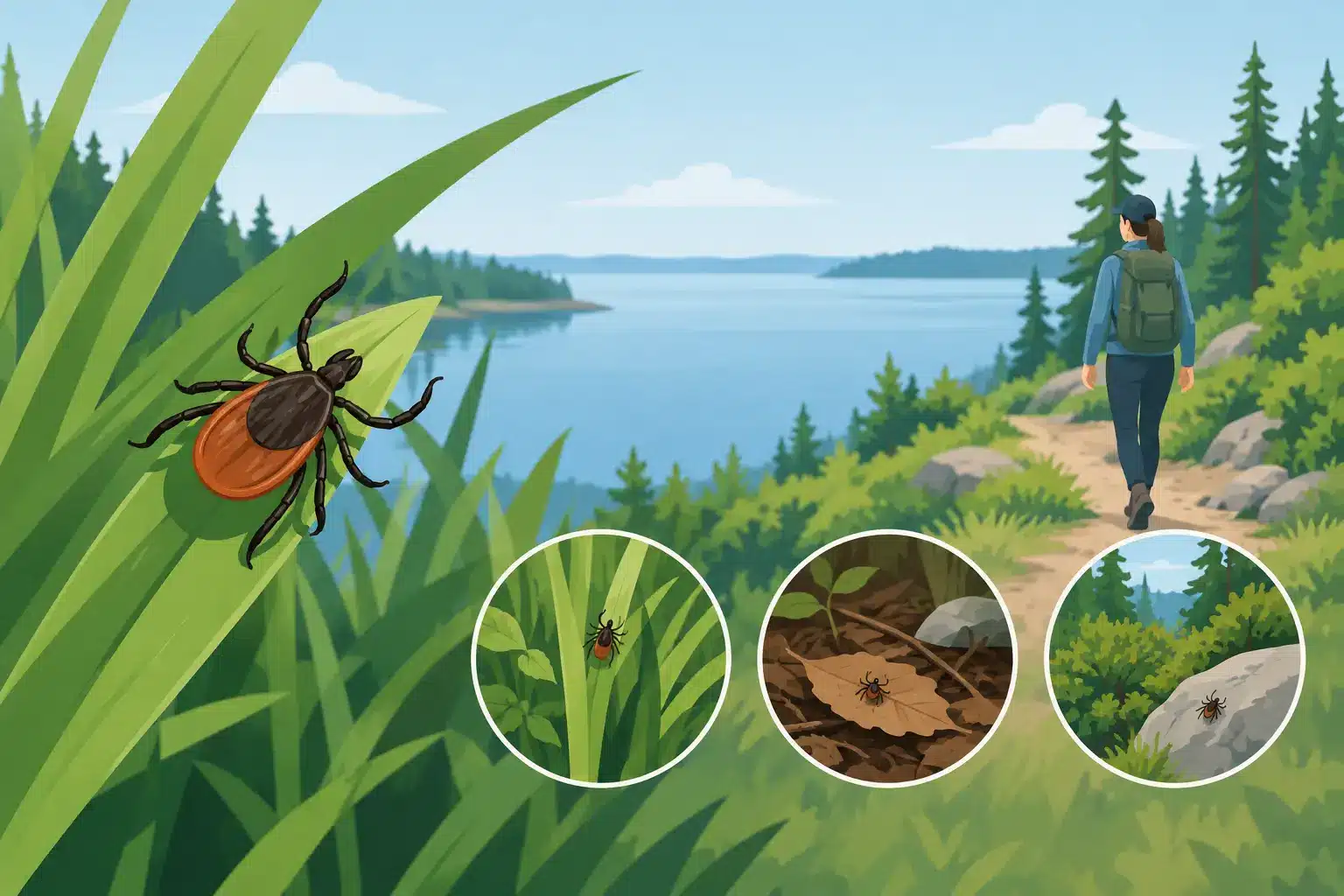
Ticks do not fly, jump or drop from trees. They wait. Understanding Ontario tick behaviour starts with that simple fact: ticks position themselves low in vegetation, sense a passing host, and climb aboard when a person, pet, deer or small animal brushes by. For families and pet owners, that makes the edges of a yard, trail or cottage property just as relevant as the woods beyond it.
In Eastern Ontario, tick activity can begin surprisingly early and continue later than many people expect. A warm stretch in spring, a mild autumn afternoon, or even a thaw during winter can bring ticks out in search of a meal. Knowing where they hide and what conditions favour them helps you make smarter decisions about outdoor time, property maintenance and professional tick control.
How ticks find people and pets
Ticks use a behaviour called questing. They climb onto grass blades, leaf litter, low shrubs or the ends of branches, then hold their front legs out as a potential host passes. Those legs detect cues such as movement, body heat, carbon dioxide and scent.
Most ticks are not waiting deep in the centre of a wide, sunny lawn. They are more likely to be found where lawn meets shade, brush, woodlots, stone walls, gardens, tall grass and leaf litter. These transition areas give ticks the humidity they need while keeping them close to wildlife that can carry them from place to place.
A tick may attach to shoes, socks, pant legs or a dog’s coat first. It often crawls for a while before settling into a protected spot. On people, that can include behind the knees, around the waistline, under the arms, in the groin area or along the scalp. On pets, ticks commonly settle around the ears, face, neck, collar line, toes and underbelly.
This is why a quick check after time outdoors matters. Finding and removing a tick before it has been attached for long can reduce the risk of certain tick-borne infections.
Ontario tick behaviour changes with the weather
Ticks need moisture to avoid drying out. Hot, dry weather can limit their activity in exposed areas, while humid weather, dense vegetation and shaded ground cover create better conditions for them. That does not mean ticks disappear during dry periods. It means they may retreat lower into leaf litter or shaded vegetation until conditions improve.
Blacklegged ticks, commonly associated with Lyme disease risk, can be active whenever temperatures are above freezing. In practice, spring and fall are often periods of heightened concern because adults are actively seeking hosts and people are spending more time outdoors. Nymphs, which are very small and easy to miss, are commonly active in late spring and summer.
American dog ticks are also present in parts of Ontario and are more commonly encountered from spring into summer. Different species have different activity patterns, but the practical advice is the same: do not treat tick season as a short window that ends after one warm month.
For homeowners, the highest-risk days are not always obvious. A cool, damp May morning spent gardening, a September walk along a wooded path, or an October afternoon raking leaves can all create exposure. Mild weather extends the time people, pets and ticks are active in the same spaces.
Why yard edges matter more than open grass
A well-maintained lawn is not automatically tick-free, but open, sunny and closely cut grass is generally less inviting than a shaded perimeter with dense cover. Ticks benefit from the same things many Ontario yards naturally have: mature trees, ornamental shrubs, stacked firewood, ground cover, tall grass and damp leaf litter.
Wildlife plays a major role as well. Deer can carry adult ticks across a property, while rodents and other small mammals may support immature ticks. Birds can also move ticks into new areas. You may not see a deer in the backyard every day, yet ticks can still be present because wildlife has passed through.
Pay particular attention to areas where children and pets play near vegetation. A swing set beside a hedge, a dog run along a wooded fence line, a seating area near overgrown shrubs or a path to the shed can all put people in contact with tick habitat. The concern is not that every shaded corner contains ticks. It is that these areas offer the conditions ticks use to survive and wait for hosts.
What increases tick activity around a property
Tick pressure varies by property. Two homes on the same road can have very different exposure based on shade, vegetation, wildlife movement and how the outdoor space is used. Risk often increases when several conditions overlap:
- Thick shrubs, tall grass or unmanaged vegetation meet the lawn.
- Leaf litter, brush piles or dense ground cover hold moisture close to the soil.
- Woodlots, ravines, fields or unmanaged neighbouring land border the property.
- Deer, mice, chipmunks or other wildlife regularly travel through the yard.
- Pets spend time along fence lines, under shrubs or on wooded trails.
There is a trade-off to consider when managing these conditions. Native plants, mature trees and naturalized areas can be valuable parts of a landscape. The goal is not to strip a property bare. It is to create separation between high-use outdoor areas and the dense, moist vegetation where ticks are more likely to wait.
Keeping play areas and patios set back from brush, trimming vegetation along walkways, removing excess leaf litter and maintaining a defined lawn edge can help. If your property backs onto woods or supports frequent wildlife activity, these steps may need to be paired with targeted professional treatment for more dependable protection.
Ticks are patient, but exposure is often predictable
Tick encounters can feel random because the tick itself is small and quiet. Still, exposure commonly follows predictable routines: walking the dog at the edge of a field, gardening beside a hedge, opening the cottage in spring, letting children explore a brushy corner of the yard, or hosting guests outdoors near a wooded perimeter.
That predictability is useful. It allows property owners to focus prevention where it has the greatest effect. A broad, one-size-fits-all approach is rarely the best answer. Tick control works best when it considers where people and pets spend time, where vegetation and moisture collect, and where ticks are most likely to be introduced by wildlife.
For properties in Merrickville, Kemptville, Smiths Falls and surrounding Eastern Ontario communities, shaded rural lots, cottage properties and homes near fields or woodlots often need particular attention. Mosquito Pros assesses these property-specific conditions and focuses treatment on tick habitat rather than applying product indiscriminately across every square metre of lawn.
Protecting your family and pets during tick season
Personal prevention remains essential, even on a managed property. Wear closed-toe shoes and light-coloured clothing when working in long grass or brushy areas, and keep to the centre of maintained paths where possible. Use an approved insect repellent according to the label, and speak with your veterinarian about reliable tick prevention for pets.
After outdoor time, check children, pets and yourself as soon as practical. Showering can help wash away unattached ticks, while a deliberate check helps find ticks that are crawling or have begun to attach. Do not rely on feeling a bite. Tick bites are often painless.
If you find an attached tick, use fine-tipped tweezers to grasp it close to the skin and pull upward with steady pressure. Avoid squeezing the body, coating it with substances or trying to burn it off. Clean the bite area and your hands afterward. If a rash, fever, fatigue, headache, joint pain or other concerning symptoms develop, contact a health-care professional and mention the tick exposure.
When professional tick control makes sense
Professional service is especially valuable when tick habitat overlaps with the parts of your property your family actually uses. That may be a yard bordered by woods, a dog-friendly acreage, a cottage lot, a wedding venue, a daycare outdoor space or a home where tick sightings have become routine.
The most effective approach targets shaded vegetation, perimeter zones, brushy edges and moisture-prone areas where ticks rest and quest. It also takes timing into account. Seasonal service can help maintain coverage during periods of ongoing activity, while a one-time treatment may be appropriate before an outdoor event or after a property assessment identifies a specific concern.
A lower-volume, targeted application can reduce unnecessary product use while still addressing the areas that matter. The right plan depends on the size of the property, its vegetation, wildlife pressure, the presence of children and pets, and the level of outdoor activity.
A tick-free guarantee is not realistic when wildlife and natural habitat surround a property. What is realistic is reducing the conditions and exposure points that make tick encounters more likely. A well-used yard should feel like a place for barbecues, gardening, children and dogs – not another source of worry every time someone steps into the grass.
Ontario tick risk and prevention resources
Tick risk varies by location and season. For current blacklegged tick risk areas and surveillance, see Public Health Ontario’s Vector-Borne Disease Tool. For practical bite prevention and information on Lyme disease, see Public Health Ontario’s Lyme disease guidance.

